









I'll go back, I know now that I'll go back, that my place is there,
And there it will always be, there where I can hear the Song of the Sabia.
I'll go back, I know now that I'll go back, I will lie in the shadow of
A palm that's no longer there, and pick a flower that doesn't grow.
And maybe someone's love will speak the night.
The lonely unwanted light that may bring me through the new day.
I'll go back, I know now that I'll go back, they won't be in vain,
All the plans I made to deceive myself, all the rose I made just to lose myself,
All the love I made to forget myself, those mistakes I made just to find myself.
I'll go back, I know now that I'll go back, that my place is there,
And there it will always be, there where I can hear the Song of the Sabia.
Of the Sabia.
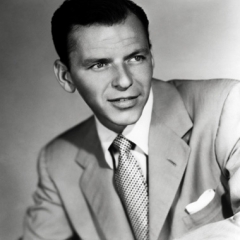
Francis Albert Sinatra, connu simplement comme Frank Sinatra, a été l'un des plus grands interprètes de la musique américaine du XXe siècle. Né à Hoboken, New Jersey, en 1915, Sinatra a commencé sa carrière musicale dans les années 1930 avec le groupe d'Harry James et ensuite avec celui de Tommy Dorsey. En 1942, il fait ses débuts en solo avec un contrat d'enregistrement avec Columbia Records. Sa voix chaude, puissante et versatile, ainsi que son charisme magnétique, l'ont fait devenir l'un des chanteurs les plus aimés au monde. Sinatra a interprété une large gamme de genres musicaux, du jazz au pop, en passant par le swing et la musique légère. Parmi ses chansons les plus célèbres figurent "My Way", "Fly Me to the Moon", "New York, New York" et "Strangers in the Night". Outre la musique, Sinatra a joué dans de nombreux films, remportant même un Oscar en 1954 pour son rôle dans "From Here to Eternity". Son influence sur la musique et la culture américaine a été immense, et continue d'être célébrée par des générations d'artistes et de fans.

 Tasha Cobbs Leonard
 Tom Brosseau
 Teena Marie
 Danger Danger
 Dan Reed Network
 The Captain Beefheart
 Ruff Ryders
 Maureen Mcgovern
 Ted Leo & The Pharmacists
 The Bird And The Bee
 Shyne
 Mary Gauthier