





Hey, what the hell do you want me to do? Hey, does it
look like I'm static to you? Well, you might look twice
cause I'm moving.
OK, you see that I can walk which is good, but still you're
trying to make me talk like you would. Your intention's
nice, you're improving.
For all you know you're doing fine, but I guess it shows
shows that even jewelry that's fake do shine.
So shut your mouth now big boy, I'm just myself not your
toy. It's in my nature to be changing.
Now is it so hard to see? You can not make me to be
someone who never will be changing.
So what the hell do you want me to say? Another halting
rhyme, another cliche. Well, you might be right this one
time. You take for granted I'm your servant subdued. It
doesn't make sense to me, but to you. So here's one
last bright make shift rhyme.
For all you know I'm just a fool, but I guess that shows
that you can not judge the dog just by it's drool.
I'm losing you for a big smile on my face. You're nothing
new and not hard to replace. I'm losing you but I'm not
losing ground.
So Peekaboo! And you won't be around.
Cause I change with time and that's not a crime.
Someone like you can not derange me. Yeah, I change
with time and that's not a crime.
It's in my nature to be changing.
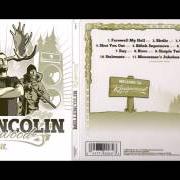
Millencolin est un groupe de rock punk suédois formé à Örebro en octobre 1992 par Erik Ohlsson, Mathias Farm et Nikola Sarcevic. En 1993, le batteur Fredrik Larzon a rejoint le groupe. Le nom Millencolin vient du trick de skateboard "melancholy". Le groupe a atteint la popularité internationale dans les années 1990 avec des albums comme "No Cigar" (1997) et "Pennybridge Pioneers" (2000), caractérisés par un son énergique et mélodique qui fusionne des éléments de rock punk, ska et pop. Parmi leurs chansons les plus connues figurent "No Cigar", "Penguins and Polarbears" et "The Ballad of the Broken Hearted Man". Millencolin continue d'être active aujourd'hui, en lançant de nouveaux albums et en participant à des festivals de musique dans le monde entier.

 Camilla Brinck
 Bloodshed
 Marionette
 Marit Bergman
 Elegant Machinery
 Smile.Dk
 Cirkus Miramar
 Blowsight
 Slagsmalsklubben
 Arckanum
 The Duskfall
 Wannadies