








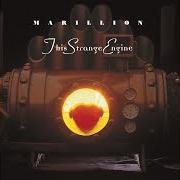
(Music: Marillion Lyrics: John Helmer)
I've been feeling kind of down and loose
Like a Rosicrucian pope
Head down deep in the womb of time
Carrying a message of hope
My hands steady as a hangman's hands
Surer than the hangman's rope
I could sleep for invisible years
Carrying a message of hope
For the future
For the future
Carrying a message
Carrying a message
Carrying a message
Message of hope
I've been feeling kind of down and loose
Like a Rosicrucian pope
Head down deep in the womb of time
Carrying a message of hope
My hands steady as a hangman's hands
Surer than the hangman's rope
I could sleep for invisible years
Carrying a message of hope
For the future
For the future
I found a power on a dusty shelf
Hey!-the languages I learned
Now I'm so powerful I hurt myself
I hurt myself
I feel kind of limbie brain
Like the library of an astronaut
Found hidden in a pyramid
Shadowing a body of thought
Carrying a message
Message of hope
Madam I'm Adam, I'm a palindrome
Never odd or even any time
Fishin and smilin like a garden gnome
Twisting tales and spinning lines
Spinning lines
Twisting tales
Why don't we twist like we did last year?
Carrying, carrying a message
Message of hope
Marillion est un groupe britannique de rock progressif formé à Aylesbury en 1977. La formation originale comprenait Steve Hogarth (chant), Mark Kelly (claviers), Pete Trewavas (basse) et Ian Mosley (batterie). Leur son, caractérisé par des mélodies complexes, des paroles poétiques et une atmosphère souvent mélancolique, a acquis un public fidèle au fil des années. Après le succès de leur premier album, "Script for a Jester's Tear" (1983), le groupe a traversé plusieurs phases d'évolution, avec des changements dans la formation et des expérimentations musicales. Leur période la plus populaire fut dans les années 1980, avec des albums comme "Fugazi" (1984) et "Misplaced Childhood" (1985). Dans les années 1990, Marillion a continué à enregistrer et à se produire, maintenant un lien fort avec ses fans. Steve Hogarth est devenu le leader principal en 1989, conduisant le groupe vers une nouvelle ère musicale. Parmi leurs chansons les plus représentatives figurent "Kayleigh", "Incommunicado" et "The Leavers". Marillion reste aujourd'hui l'une des formations progressives les plus influentes et appréciées au monde.

 Gemma Fox
 Propellerheads
 Clap Your Hands Say Yeah
 Diesel Park West
 Capercaillie
 Benediction
 Kim English
 Angelis
 Dane Bowers
 Broadcast
 Ten
 Mark Stewart