








Dry your eyes, and take your song out, it's a newborn afternoon.
If you can't recall the singer, you can still recall the tune.
Dry your eyes and play it slowly, like you're marching off to war,
Sing it like you know he'd want it, like we sang it once before.
From the center of the circle to the midst of the waving crowd.
If it ever be forgotten, sing it long and sing it loud.
Come, dry your eyes.
And he taught us more about giving than we ever cared to know.
But we came to find the secret and we never let it go.
And it was more than being holy, though it was less than being free,
And if you can't recall the reason, can you hear the people sing,
Through the lightning and the thunder, to the dark side of the moon,
To that distant calling angel who descended much too soon.
And come, dry your eyes.
[musical interlude]
Come, dry your eyes.
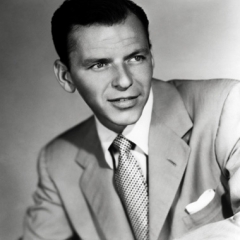
Francis Albert Sinatra, connu simplement comme Frank Sinatra, a été l'un des plus grands interprètes de la musique américaine du XXe siècle. Né à Hoboken, New Jersey, en 1915, Sinatra a commencé sa carrière musicale dans les années 1930 avec le groupe d'Harry James et ensuite avec celui de Tommy Dorsey. En 1942, il fait ses débuts en solo avec un contrat d'enregistrement avec Columbia Records. Sa voix chaude, puissante et versatile, ainsi que son charisme magnétique, l'ont fait devenir l'un des chanteurs les plus aimés au monde. Sinatra a interprété une large gamme de genres musicaux, du jazz au pop, en passant par le swing et la musique légère. Parmi ses chansons les plus célèbres figurent "My Way", "Fly Me to the Moon", "New York, New York" et "Strangers in the Night". Outre la musique, Sinatra a joué dans de nombreux films, remportant même un Oscar en 1954 pour son rôle dans "From Here to Eternity". Son influence sur la musique et la culture américaine a été immense, et continue d'être célébrée par des générations d'artistes et de fans.

 Mice Parade
 Smino
 Diamond Rio
 Noah Schnacky
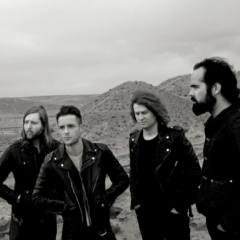 The Killers
 Esperanza Spalding
 Wolves At The Gate
 Gary Lewis
 Ronnie Day
 Lupe Fiasco
 Monstrosity
 Percy Faith