



Buffalo Soldier
Dreadlock Rasta
There was a Buffalo Soldier
In the heart of America
Stolen from Africa
Brought to America
Fighting on arrival
Fighting for survival
I mean it
When I analyse the stench
To me, it makes a lot of sense
How the Dreadlock Rasta
Was the Buffalo Soldier
And he was taken from Africa
Brought to America
Fighting on arrival
Fighting for survival
Said he was a Buffalo Soldier
Dreadlock Rasta
Buffalo Soldier
In the heart of America
If you know your history
Then you would know where you coming from
Then you wouldn't have to ask me
Who the heck do I think I am
I'm just a Buffalo Soldier
In the heart of America
Stolen from Africa, brought to America
Said he was fighting on arrival
Fighting for survival
Said he was a Buffalo Soldier
Win the war for America
Buffalo Soldier, trodding through the land
Said he wanna ran, then you wanna hand
Trodding through the land, yea, yea
Buffalo Soldier
Win the war for America
Buffalo Soldier, Dreadlock Rasta
Fighting on arrival, fighting for survival
Driven from the mainland
To the heart of the caribbean
Trodding through San Juan
In the arms of America
Trodding through Jamaica, a Buffalo Soldier
Fighting on arrival, fighting for survival
Buffalo Soldier, Dreadlock Rasta
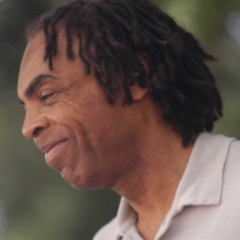
Gilberto Gil, né Gilberto Passos Gil Moreira le 26 juin 1942 à Salvador de Bahia, au Brésil, est un auteur-compositeur-interprète, musicien et homme politique de renommée internationale. Considéré comme l'un des piliers de la musique brésilienne, Gil a traversé différentes phases musicales, du bossa nova au rock progressif, influençant des générations d'artistes par sa polyvalence et son engagement social. Il a commencé sa carrière dans les années 1960 avec un son psychédélique et folk, anticipant les sonorités du mouvement Tropicalisme brésilien. Au cours des années, il a collaboré avec des artistes comme Caetano Veloso, Gal Costa et Tom Zé, contribuant à façonner l'identité musicale du Brésil. Gil a également été ministre de la Culture de 2003 à 2008, démontrant un engagement politique fort pour la promotion de l'art et de la culture dans son pays. Parmi ses chansons les plus représentatives figurent "Expresso 2222", "Aquele Abraço" et "Domingo no Parque". Gilberto Gil reste une figure emblématique du paysage musical brésilien, apprécié tant pour sa musique innovante que pour son engagement social.

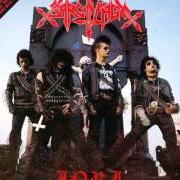 Sarcófago
 Tiê
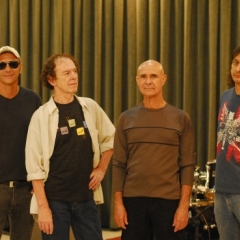 14 Bis
 Costa Gold
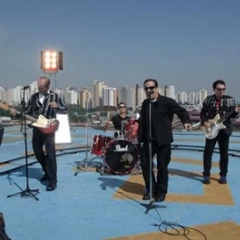 Ira!
 Henrique & Diego
 Aviões Do Forró
 Calcinha Preta
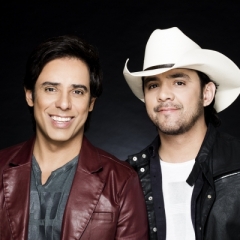 Guilherme E Santiago
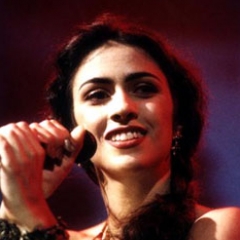 Marisa Monte
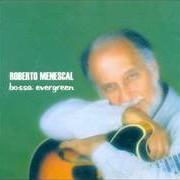 Roberto Menescal
 Lisa Ono