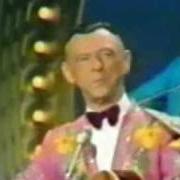









One dark and stormy night while riding down the line;
Railroad Bill, the engineer said, "Boy, we'll have to fly!"
We've got to be on time, to meet old Number Four.
So sling the coal, we'll make it, boy, or never ride no more.
While in the rear boxcar, a lonely hobo lay,
Heading for his mother dear, who on her death-bed lay;
He raised a weary hand, to brush away a tear,
Not knowing his last drive was run, and Fate was drawing near.
When through the darkened night, a headlight bright did gleam,
O'er the roar of rolling wheels, a whistle load did scream;
As down around the curve, the mighty train did roar,
With black smoke rolling from the stack, came Flyer Number Four.
Then came an awful crash! Their last long drive was run,
On the track the hobo lay, his days of life were done;
And as the golden sun, sank slowly to the west,
His dear old mother gently smiled, and closed her eyes in death.
Hank Snow (Clarence Eugene Snow), né en Nouvelle-Écosse, Canada, en 1914, fut l'un des piliers de la musique country américaine. Sa carrière, commencée dans les années 1930, a traversé un demi-siècle de succès et d'influences. Snow était un interprète talentueux, capable de donner au public des chansons mémorables comme "I'm Movin' On", "The Golden Rocket" et "Hello, I'm Hank Snow". Sa musique, caractérisée par des mélodies accrocheuses et des paroles qui racontaient des histoires de la vie quotidienne, a conquis un large public. Hank Snow fut l'un des premiers artistes country à connaître le succès national aux États-Unis, ouvrant la voie à d'autres musiciens du genre. En 1959, il reçut une étoile sur le Walk of Fame d'Hollywood en reconnaissance de sa contribution à la musique américaine. Son héritage continue d'inspirer les générations de musiciens country.

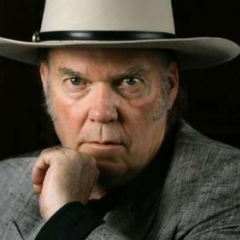 Neil Young
 Nylons
 Dead And Divine
 Pat Travers
 Magic!
 Tom Green
 Jeff Healey Band
 Mother Mother
 France Joli
 Sweatshop Union
 Blue Hawaii
 Terry Jacks