





He's gonna go down,
If I keep turning him around.
I don't want to see him go,
Don't want to see him go.
No, because he's seen
A lot of fast-talkin' women.
I believe,
I believe, I'd better take it slow,
Because I know, I know that this is love,
And this is the day.
This is love,
This is the day.
Oh, this is love,
This is the day,
The day that he's drivin' on ice.
Whoa, but his body's full of fire and flyin'.
Smile on his face looks so nice, but he's just so tired of tryin'.
The morning brings cold weather and,
The nights are all alone;
And he thinks about that woman and he wonders,
Ah! Will she ever know that he's lovin' her;
Oh, he's lovin' her
Like he's, never loved,
Like he's never loved before.
And bein' alone,
Just not that easy anymore.
But don't you be sorry,
No, don't you be sad.
Ah, you know things change.
The woman isn't gonna wanna keep you, No!
Any longer, than you want to stay.
Well, so go to her,
When you think you know,
This is love, this is the day.
This is love, this is the day.
This is love,
Oh, this is love,
This is the day.
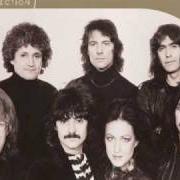
Jefferson Starship est un groupe de rock américain formé à San Francisco en 1974 à partir des restes du Jefferson Airplane et du projet solo de Paul Kantner. Après la dissolution du Jefferson Airplane, Kantner a réuni certains membres pour former le nouveau groupe, qui comprenait des artistes comme Grace Slick, David Freiberg et Marty Balin. Le style musical du groupe est principalement du rock progressif avec des influences psychédéliques et folk. Jefferson Starship a connu un grand succès dans les années 1970 et 1980 avec des albums tels que "Dragon Fly" (1974), "Red Octopus" (1975) et "Spitfire" (1976). Parmi leurs chansons les plus célèbres, on peut citer "Somebody to Love", "We Built This City" et "Jane". Le groupe a traversé plusieurs phases d'évolution, avec des changements dans la formation et le son musical. En 2018, Paul Kantner est décédé suite à des complications liées à une intervention chirurgicale.

 Moby
 Dolla
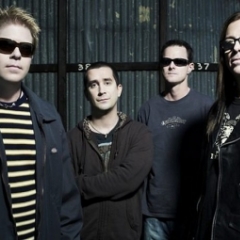 The Offspring
 Martin Castillo
 The Lively Ones
 Low
 Dave Brubeck Quartet
 Dean Strickland
 Ras Kass
 Willy Deville
 Tank And The Bangas
 Kj-52